NYN | News
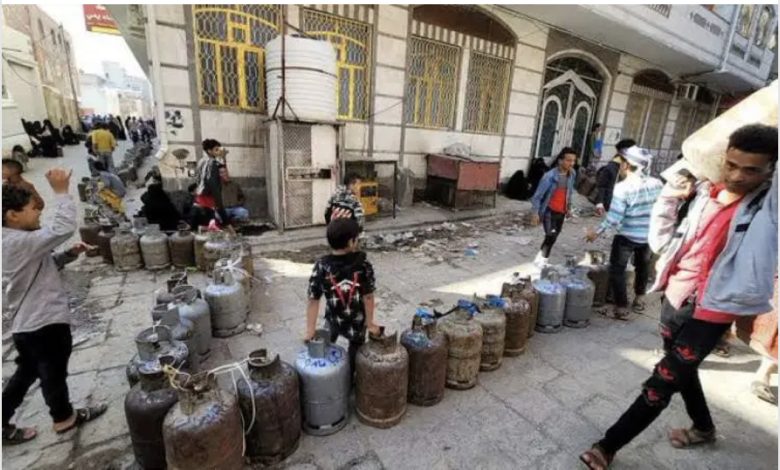
Taiz governorate is witnessing an escalating crisis in household gas supplies, following a significant—and unannounced—drop in the quantities arriving at filling stations in recent days. According to local sources, the decline has directly affected residents, leading to long queues and rising prices.
According to labor-union sources, household gas filling stations have recorded a sharp decrease in incoming quantities over the past few weeks, forcing them to rely on part of the allocations designated for distribution agents in the districts. However, these allocations themselves have shrunk even further in recent days, widening the scope of the crisis in both Taiz city and its rural areas.
Residents reported that the price of a gas cylinder has risen at filling stations to around 10,500 rials, compared to the official agent price of 9,500 rials, amid complaints of underweight cylinders, while many agents have become unable to obtain their usual quotas.
At the same time, the districts of Taiz city are suffering from an acute shortage of gas allocated for vehicles. Public transport drivers say the expected daily quota—six tankers—has been drastically reduced, with only one tanker actually arriving. They described this as a “major supply deficit” that has caused a partial standstill in transportation and disrupted the livelihoods of thousands.
Vehicle fueling stations have informed drivers of a severe shortage in quantities allocated to major consumers, prompting them to impose long waiting hours at distribution points. This comes as the number of gas-powered vehicles increases, with many residents converting from gasoline to gas to reduce expenses.
Drivers are calling on the government, the Ministry of Oil, and the Yemen Gas Company to intervene urgently to correct irregularities in the loading process and ensure the full delivery of the daily quota. They warn that the continuation of the current situation will lead to widespread disruption of mobility within the city, increased living pressures on residents, and worsening hardship for families that rely heavily on gas for household needs.