Israeli Report Reveals “Quiet” Cooperation Between Tel Aviv, the Gulf, and India to Address Red Sea Challenges
Defense technology and infrastructure security drive undeclared coordination away from formal political alliances
NYN | Reports and Analyses
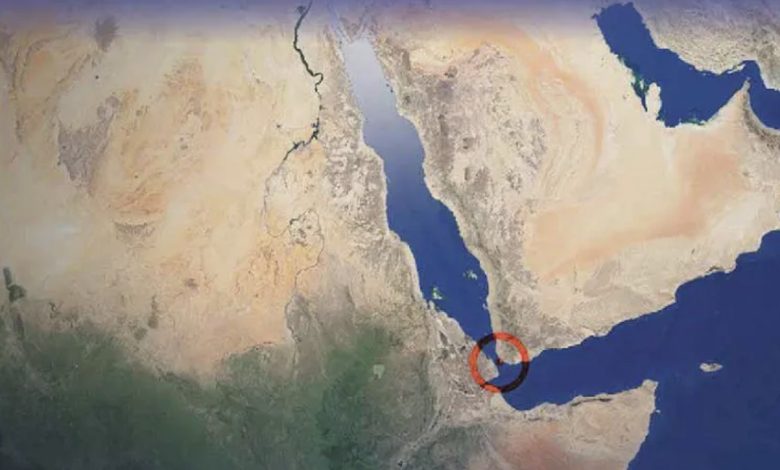
The Israeli newspaper The Jerusalem Post has revealed a noticeable growth in “quiet” and undeclared cooperation between Israel, Gulf states, and India, focused on defense technology, infrastructure protection, and supply chains, amid the challenges posed by developments in the Red Sea over the past two years.
According to a report published by the newspaper and monitored by Al-Yemen Al-Jadeed News, the Red Sea crisis has accelerated this type of functional coordination, which takes place outside formal political frameworks and declared security alliances. The cooperation is driven by what the report described as “shared vulnerabilities,” rather than official positions or rhetoric.
The Red Sea as a strategic vulnerability
The report noted that the crisis has exposed a structural fragility for Israel, as an economy heavily dependent on technology and global supply chains, making it in constant need of secure maritime and digital connectivity. It pointed out that Israel’s technological defense sector—encompassing cybersecurity, sensing and surveillance systems supported by artificial intelligence—has increasingly oriented itself toward addressing challenges where physical and digital domains intersect, with the Red Sea standing out as a prominent example.
Cooperation without formal alliances
The newspaper emphasized that there is no formal security alliance linking Israel with Gulf states and India in the Red Sea region, due to political sensitivities and divergent regional positions. Nevertheless, cooperation continues through technical and operational channels, including enhancing maritime domain awareness, protecting critical infrastructure, cyber resilience, and logistics security, as well as dual-use defense technologies.
The report added that information sharing, the development of parallel capabilities, and converging standards have begun to replace public agreements and treaties, in a model of cooperation described as “politically flexible and operationally effective.”
Supporting regional connectivity initiatives
The newspaper argued that this quiet cooperation is accelerating the implementation of economic connectivity initiatives, foremost among them the India–Middle East–Europe Economic Corridor, even in the absence of political momentum or official fanfare. Infrastructure security, it noted, is a fundamental prerequisite for any cross-regional economic integration.
The report also suggested that this coordination is redefining the Red Sea as a link between the Middle East and the Indo-Pacific region, rather than a dividing line between them—a perception that aligns with India’s strategic vision and is gaining increasing acceptance among decision-makers in the Gulf and Israel.
Existing gaps and challenges
Despite the importance of this rapprochement, the report pointed to structural gaps that limit its depth and sustainability, most notably the continuation of political and security tensions, particularly the war in Gaza and the resulting freeze in official normalization tracks, especially with Saudi Arabia, creating a persistent trust deficit.
It also warned of the fragility of the physical infrastructure underpinning this connectivity, citing growing security pressures on the Port of Haifa, a key hub in emerging economic corridors, amid missile and drone threats. This raises concerns among potential partners in the Gulf and India about the long-term reliability of Israeli hubs.
A flexible partnership not reliant on declarations
The report concluded by stressing that these gaps do not negate the emerging cooperation but rather shape its contours. They push the parties involved to favor a quiet, flexible model of cooperation based on repetition, adaptability, and technological mitigation, instead of overt political commitments. The report considered that the most sustainable partnerships at the current stage are those built on systems and capabilities, not on statements and formal agreements.