Yemen in the Mirror of Western and Hebrew Media: Fractured Alliances and a Shift from Proxy Wars to Major Interests
International coverage reveals intensifying Saudi–Emirati rifts in Yemen, Red Sea repercussions, and growing Israeli concern over Iran and the erosion of deterrence
NYN | Reports and Analyses
The Yemeni file dominates international media
The Yemeni file has dominated Western and Hebrew media coverage over the past week, with notable focus on escalating tensions within the Saudi–Emirati coalition camp and their political and military repercussions on the ground, amid the growing inability of the so-called “legitimacy” to impose any real balance in the south.
Qatar’s Al-Araby Al-Jadeed newspaper affirmed in several reports that the UAE-backed Southern Transitional Council (STC) has become the most powerful actor in Aden, controlling institutions and government decision-making, while the influence of Al-Alimi’s government continues to wane. Citing sources in Riyadh and Cairo, the paper reported that the Chairman of the Presidential Leadership Council is relying almost entirely on a decisive Saudi stance, warning that continued ambiguity will make containing the STC nearly impossible.
Allies in conflict: Riyadh and Abu Dhabi on a collision course
Western media devoted extensive space to analyzing the growing rift between Saudi Arabia and the United Arab Emirates in southern Yemen. The American magazine The Cradle argued that Riyadh has begun to realize it is losing the field battle to Abu Dhabi, prompting it to search for “rear arenas” to reengineer its Gulf alliances, including rapprochement with Qatar in an effort to politically isolate the UAE.
Meanwhile, Britain’s The Telegraph described the Saudi–Emirati rivalry as “destructive” and in need of urgent international attention, noting that Washington prefers to remain an observer despite the conflicting agendas of its allies.
For its part, Chatham House warned that the phase of “strategic patience” between the two countries is nearing its end, arguing that signs of Saudi confusion are most clearly visible on Yemen’s borders, not on those of the UAE.
Hadramout and Al-Mahrah: a struggle for influence and energy
The French website Dark Box revealed that the STC’s expansion toward Hadramout and Al-Mahrah was not a spontaneous move, but followed months of coordination and Emirati political support, within a vision that views eastern Yemen as a strategic prize, particularly in the energy and infrastructure sectors.
The report noted that Saudi Arabia opted for a “quiet withdrawal” to avoid a direct clash, but is increasingly concerned about the STC crossing red lines, especially after taking control of vital facilities.
In the same context, Italy’s InsideOver suggested that an indirect confrontation between Riyadh and Abu Dhabi is approaching, while ruling out a conventional war and stressing that it will remain a “bone-breaking” contest through local proxies.
Mutual threats and economic pressure tools
Tensions escalated after public messages from UAE presidential adviser Abdulkhaleq Abdullah to Rashad Al-Alimi, urging him to “exit the political scene with dignity,” a move widely seen as a direct threat.
Conversely, Saudi media figures hinted at the possibility of a harsh response should the STC’s “rebellion” continue, while the Washington Institute warned of potential clashes in Hadramout and its valley between forces loyal to the two sides.
Economically, Al-Araby Al-Jadeed reported that Saudi Arabia is studying the transfer of the Central Bank’s management from Aden to Riyadh or Amman, a step interpreted as a direct pressure card, amid warnings of catastrophic repercussions on living conditions in coalition-controlled areas.
The Red Sea: a cautious return of trade
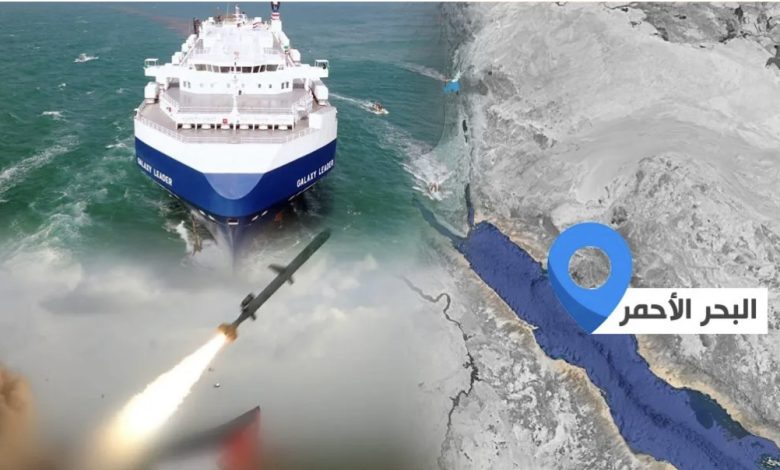
Western coverage also addressed the cautious resumption of shipping through the Red Sea and Bab al-Mandab. Britain’s The Load Star quoted Taiwan’s Yang Ming shipping company as saying that any full return depends on a complete halt to attacks, linking this to the stability of the Gaza agreement—an indication of the continued impact of Yemeni operations on global trade.
In contrast, Hebrew media focused on the crisis at Umm al-Rashrash (Eilat) Port. The website Walla described its paralysis since the start of Yemeni attacks as a “national crisis,” noting that insurance companies still refuse to cover the risks.
Growing Israeli anxiety and warnings against adventurism
Inside Israel, a tone of anxiety has prevailed. Haaretz published an article by retired Major General Yitzhak Brik warning that any attack on Iran could lead to a “national catastrophe,” given the depletion of missile defense systems and Tehran’s ability to deliver precise strikes.
Yedioth Ahronoth also sparked wide debate by publishing claims about a “fourth-generation” Iranian nuclear project, while acknowledging that Tehran currently lacks actual capability, according to U.S. assessments.
This coincided with warnings from Israeli officials and experts about rising fear within society following the exposure of dozens of espionage cases linked to Iran.
Gaza and settlements: the failure of Israeli options
On the Gaza front, calls emerged within Hebrew media to return the Palestinian Authority to the Strip as the “least costly option” for the occupation army—an implicit acknowledgment of the failure of other alternatives.
On the ground, the occupation’s war cabinet approved the establishment of 19 new settlements, a move described by UN Special Rapporteur Francesca Albanese as “geographic genocide.” She also criticized gas deals with the occupation as a blatant violation of international law.
Trump: fragile diplomacy and distant drums of war
Internationally, Foreign Policy columnist Stephen Walt sharply criticized U.S. President Donald Trump, describing his announced agreements as “fake and dangerous” because they lack genuine diplomatic preparation.
On the military front, reports monitored a U.S. buildup at MacDill Air Force Base in Florida, amid indications of a potential escalation off the Venezuelan coast in pursuit of oil wealth—a scene reminiscent of what unfolded in the Red Sea.
The overall picture
Western and Hebrew media coverage reflects a highly turbulent regional landscape: an unprecedented fracture within the coalition in Yemen, the continued impact of Yemeni operations in the Red Sea, and growing Israeli anxiety over Iran and the erosion of deterrence.
It is a picture that confirms the region is heading into a more uncertain phase, where traditional alliances weaken and surprises take the lead—at a time when Yemen has become a living model in the calculations of conflict, from the Red Sea to the Caribbean.