Bin Zayed’s Adviser Attacks Rashad al-Alimi with Insulting Descriptions, Labels His Council a “Government in Exile”
An unprecedented Emirati escalation reveals the depth of rifts within the coalition camp and brings back to the fore the issue of financial support and political dependency
NYN | Reports and Analyses
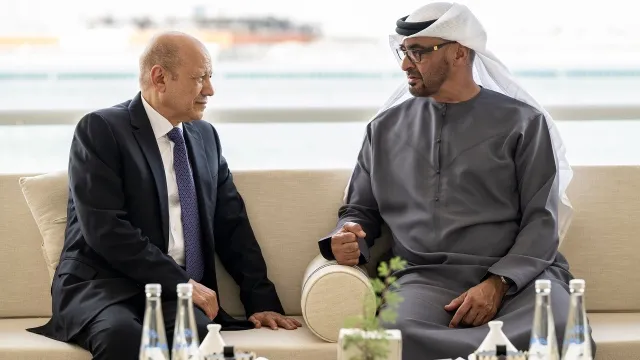
A political adviser to the president of the United Arab Emirates launched a scathing attack on Rashad al-Alimi, head of the coalition-backed Presidential Leadership Council, in a tweet that sparked widespread controversy and reflected the scale of fractures within the Saudi–Emirati coalition camp in Yemen.
Insulting Descriptions and a Comparison with Hadi
Abdulkhaleq Abdulla, the political adviser to the UAE president, used demeaning language to describe Rashad al-Alimi, labeling him a “beggar,” and referred to the Presidential Leadership Council as a “government in exile.” This characterization clearly signaled a lack of recognition of its effectiveness or legitimacy on the ground, especially in comparison with his predecessor, former President Abd Rabbo Mansour Hadi.
Talk of Money and Previous Emirati Support
In his tweet, Abdulla referred to what he described as “previous Emirati support” provided to al-Alimi, recalling the period of his stay in the Saudi capital, Riyadh, before moving to Abu Dhabi. He claimed that al-Alimi had complained of mistreatment and requested financial support during that time.
Aggressive Language and Unprecedented Escalation
Bin Zayed’s adviser concluded his tweet with a barrage of hostile phrases, describing al-Alimi as “ungrateful” and hinting at the possibility that he could turn against his backers. The tone reflected an unprecedented level of public escalation between figures aligned with the coalition.
Coalition Infighting and Its Impact on Yemen’s Internal Situation
This attack comes amid a series of statements and leaks in which Saudi and Emirati officials and media figures have revealed sharp disagreements within the coalition-backed government camp, including talk of billions of dollars being provided to political leaders. This is taking place at a time when areas under their control are experiencing a rapid economic collapse, a severe deterioration of the currency and public services, and worsening living conditions for citizens.