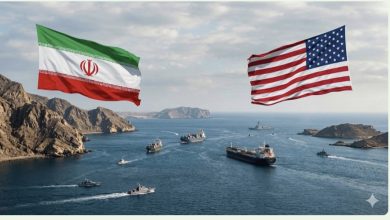
Zionist Center: U.S. Aircraft Carriers in the Red Sea Are a “Show of Force” After Failure Against Yemen
A Hebrew report warns that Yemen’s coastline has become a “killing environment” for Western vessels and describes the confrontation as a deadly war of attrition.
NYN | Reports and Analyses
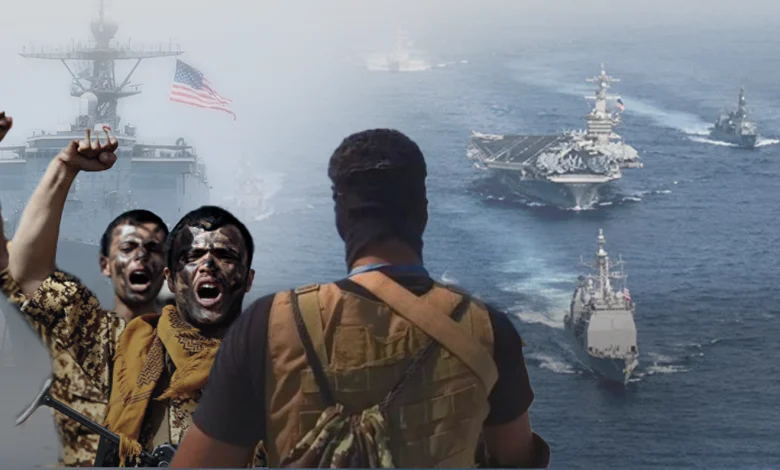
The newspaper Jerusalem Strategic Tribune stated that the naval presence maintained by the United States Navythrough the deployment of aircraft carriers and warships off Yemen’s coast no longer carries real practical substance, describing it instead as a formal show of force following the failure of the U.S. Navy — the largest in the world — to impose its equation during the Red Sea confrontation with Yemenis.
The newspaper asserted that the presence of aircraft carriers in the Red Sea and the Gulf of Aden was supposed to represent preemptive deterrence. However, according to the report, field realities reveal that the threat environment has fundamentally changed and is moving in a direction contrary to Washington’s interests.
Warning of Another Failure Washington Cannot Afford
According to the report, the U.S. Navy cannot bear the cost and consequences of another failure in the region, especially amid escalating regional tensions and the possibility of a broader confrontation with Iran — making any mistake in the Red Sea politically and militarily costly.
Bab al-Mandab a “Danger Zone” for Aircraft Carriers
The newspaper noted that Yemen’s possession of an integrated attack system, including:
Anti-ship cruise missiles
Anti-ship ballistic missiles
One-way attack drones
Naval mines
Unmanned surface vessels and boats
has turned the strategic Bab el-Mandeb — linking the Red Sea with the Indian Ocean and the Suez Canal — into a high-risk zone for aircraft carriers and Western vessels.
Multi-Layered Threat Network Complicating Naval Defense
The report pointed out that Yemen’s arsenal represents a multi-layered coastal threat network capable of reducing warning times and complicating any maritime defense operation, placing the U.S. Navy in a new reality of hybrid warfare to which it is unaccustomed.
The newspaper added that advanced Western naval platforms have failed to deter Yemeni attacks, arguing that these systems are confronting the limits of physics and geography — leaving the world’s most advanced naval force unable to curb or contain the strikes.
Long War of Attrition and “Deadly” Risks
The report warned that attempting to confront Yemeni capabilities across a vast maritime area in which Yemeni forces operate amounts to a massive war of attrition — one that modern U.S. aircraft carriers and warships cannot sustain for long — noting that the risks could become “deadly” at any moment.
Crew Fatigue and Rising Risk of Error
The report explained that U.S. vessels are operating at maximum alert around the clock — from surveillance and intelligence to cyber capabilities and full combat readiness — placing significant strain on crews and increasing the likelihood of mistakes and failure.
The newspaper concluded that Yemen’s strategy of “synchronized pressure” and intensive, low-cost attacks could achieve lethal results at any time.
Expanding Threat to U.S. Bases and Regional Allies
According to the study, the implications of Yemen’s firepower control in the Red Sea and off its coastline are now evident for U.S. forces and their allies. It noted that American facilities in the Middle East are increasingly within range of missile and drone attacks.
It further stated that regional allies’ bases face similar risks, while vessels transiting the Red Sea — classified by Yemenis as “hostile” — remain under continuous threat along their maritime routes.