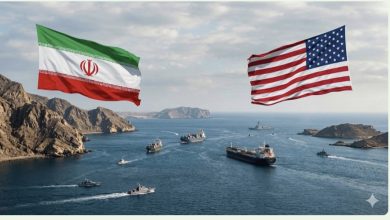
The U.S.-Led Coalition in the Red Sea: “Prosperity Guardian” Becomes a Title Without Effectiveness
Ethiopian Website Says Washington and Brussels Failed in Bab al-Mandab Due to Misjudging Houthi Capabilities… Calls for Leveraging Ethiopia’s Role in Maritime Security Equation

NYN | Reports and Analyses
The Ethiopian website Addis Standard stated that the U.S.-led maritime coalition in the Red Sea, operating under the name Operation Prosperity Guardian, has become “merely ink on paper,” citing what it described as repeated operational setbacks in the face of escalating operations launched from Yemen’s coastline.
The outlet added that the same assessment applies to the European naval mission known as Operation Aspides, stressing that the possession by the United States and Europe of advanced destroyers and naval assets has not translated into effective control over one of the world’s most vital maritime corridors.
Operational Failure Despite Technical Superiority
The report explained that the challenges facing the U.S. Navy in the Red Sea and the Bab al-Mandab Strait are not due to technical shortcomings or weak armament, but rather to a “miscalculation” of the Houthis’ capabilities and their operational impact in waters adjacent to Yemen’s coast.
According to the website, the challenge has not been purely naval, but instead tied to a land-sea equation. The Houthis, it argued, have leveraged their ground control over large areas of Yemen’s western coastline to transform it into a direct pressure platform affecting international shipping through the Bab al-Mandab Strait.
Bab al-Mandab: An Equation Beyond the Sea
The report contended that addressing Red Sea security through a “coast-only” doctrine will not yield decisive results, asserting that any maritime strategy isolated from the land equation will remain limited in effectiveness.
It also criticized what it described as an “exclusive approach” that considers Red Sea security the sole responsibility of littoral states, referencing ongoing debates about the role of non-coastal countries in regional security arrangements.
Addis Ababa and the Ambition for Maritime Access
The Ethiopian outlet openly advocated expanding Addis Ababa’s role in Red Sea security arrangements, urging Washington and Western powers to capitalize on what it described as Ethiopia’s “demographic and military weight” in reshaping the maritime security equation.
This comes amid Ethiopia’s declared ambitions to secure access to the Red Sea — whether through long-term arrangements or regional understandings — against the backdrop of ongoing tensions with Eritrea and attempts at rapprochement with Somaliland.
Open Regional Transformations
Observers say this perspective reflects broader shifts in the regional balance of power around the Red Sea, where security challenges have become intertwined with complex land and political dynamics that extend beyond traditional naval operations.
With tensions persisting in Bab al-Mandab, the maritime deterrence equation appears to be undergoing a real test, amid growing questions about the effectiveness of international coalitions and their ability to contain emerging threats in one of the world’s most strategically sensitive waterways.