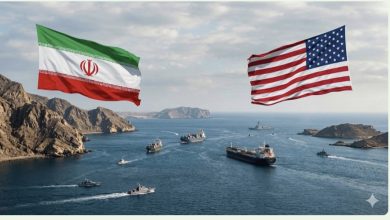
Rapid Escalation in the Red Sea: 3 Waves of Attacks in 10 Hours and 5 Aircraft Downed in a Single Day
International mediation falters as Yemen prepares for a major naval confrontation amid maritime pressures and record-high oil prices.
NYN | Reports and Analyses
The region is witnessing an unprecedented military escalation as diplomatic efforts aimed at securing a ceasefire between Washington and Tehran hit a deadlock. This coincides with growing indicators that the confrontation is entering a more complex phase, particularly in the Red Sea.
Diplomatic Efforts Fail
International reports indicate that initiatives led by Pakistan, with Chinese support, have reached an impasse following Iran’s rejection of U.S. conditions and its refusal to engage in direct negotiations at this stage.
This stalemate occurred despite the proposal of a five-party initiative aimed at ceasing hostilities and ensuring the security of maritime corridors, following a regional meeting in Islamabad that included several foreign ministers.
Intensive Field Escalation
On the ground, the past few hours saw the execution of three waves of attacks within just 10 hours—operations described as the most intensive since the outbreak of the confrontation.
Furthermore, the downing of five aircraft in a single day was announced, a development reflecting the heightened capabilities of air defenses and the intensification of military operations across multiple fronts.
The Red Sea on a “Tin Roof”
Western reports suggest that Yemeni forces have completed preparations for a broad naval confrontation by reinforcing their deployment along the western coast, specifically in areas extending to the Bab el-Mandeb strait.
These preparations include the deployment of anti-ship missile systems and unmanned surface vessels (USVs), alongside specialized naval units, signaling a shift toward a strategy of progressive offensive operations.
Pressure on International Shipping
In a related context, global shipping companies have begun taking precautionary measures, including modifying their vessels’ identification data to stress their neutrality and lack of affiliation with any party to the conflict, in an attempt to avoid being targeted while transiting the region.
Mounting Economic Repercussions
Economically, the escalation has driven global oil prices to nearly $119 per barrel, amid warnings of severe disruptions to international supply chains.
Meanwhile, U.S. forces face increasing challenges, with reports indicating a depletion of defensive resources, forcing the redeployment of systems from other regions to compensate for the shortage.
Internal Political Pressure in Washington
Politically, pressure is mounting on the U.S. administration as the war continues. Estimates point to a decline in public support, which may push Washington toward seeking a diplomatic exit to mitigate the rising costs of the confrontation.
Between the political deadlock and the escalation of military operations, the region is heading toward a more sensitive stage. The possibility of the conflict expanding remains high, especially in the Red Sea, which has become a central axis in the conflict equation.