Europe and the Strait of Hormuz: Shipping Crisis Fallout and Limited Options
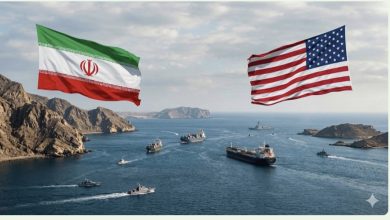
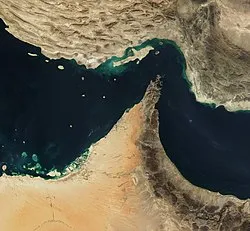
The Strait of Hormuz has long been a lifeline for the global economy—a vital passage linking East and West through which the world’s energy and trade flow. Today, however, this artery appears constricted, and Europe finds itself in a state of strategic confusion as it grapples with the consequences of a crisis threatening to halt shipping traffic. Concerns are mounting over severe global economic repercussions, while the continent seems unable to formulate a clear plan to safely restore trade flows.
NYN | Reports and Analyses
Europe’s Dilemma and Its Limited Maritime Security Options
The New York Times has highlighted the depth of Europe’s predicament, noting that officials from around 40 countries held a virtual meeting to discuss ways to resume navigation through the Strait of Hormuz. However, the meeting concluded without any concrete plan. Even an Italian initiative to establish a “humanitarian corridor” for fertilizers and essential goods to poorer nations failed to gain consensus or sufficient support. This failure reflects the extent of divisions among European states, the slow pace of decision-making mechanisms, and the need for United Nations approval for any international action.
European countries are also under direct pressure from the U.S. administration to deploy immediate military assets to break what is described as a “blockade” of the strait. Europe, however, has declined these calls, preferring less escalatory options, particularly to avoid direct confrontation. The report outlines four main paths currently under discussion, each with significant challenges:
Escorting commercial vessels: A proposal backed by France, but it faces obstacles such as high costs and limited defensive capability against drone attacks. German Defense Minister Boris Pistorius questioned whether a small number of European ships could achieve what even the U.S. Navy has struggled to do.
Deploying minesweepers: A German-Belgian proposal, though its effectiveness is doubtful, as estimates suggest Iran has not actually laid mines.
Providing air cover: A costly and uncertain option, as even simple attacks by fast boats could be enough to deter shipping and insurance companies.
Combining military and diplomatic tools: This includes engaging global powers such as China to pressure Iran, but remains uncertain given the failure of diplomatic efforts so far to de-escalate tensions.
Deep Economic Impact and Global Energy Prices
If these options fail, fears are rising over a more dangerous scenario. Iranian officials have hinted at continuing to control traffic through the strait even after tensions subside, with plans to impose transit fees on ships—despite the strait being considered an আন্তর্জাতিক waterway under international law. This scenario threatens wide-ranging economic consequences, as the world heavily depends on shipments passing through the strait, particularly fuel and fertilizers, putting global oil and gas prices at risk.
Signs of crisis have already begun to emerge in some regions through supply shortages. Europe is facing rising oil, gas, and fertilizer prices, threatening to increase inflation and weaken economic growth. These increases directly affect shipping and trade costs, negatively impacting consumers and intensifying cost-of-living pressures. Hans Koenig, CEO at Aurora Energy Research, warned that the greatest risk lies in the persistence of these disruptions, which could reshape global energy markets entirely.
Geopolitical Dimensions and the Future of Trade Routes
Beyond the immediate economic effects, the Strait of Hormuz crisis carries profound geopolitical implications. Iran’s stance reflects a desire to assert regional sovereignty and influence over vital trade routes amid what it perceives as external pressure. This tension signals a shift in regional and global power balances, with certain actors seeking to redefine the rules of international navigation.
Europe, striving to secure its investments and trade, finds itself caught between U.S. pressure and the economic and security risks associated with escalation. The inability to reach practical solutions underscores the fragility of global maritime security and poses a major challenge to the current international system.
The strait is not merely a waterway—it is a focal point in the struggle of interests between major and regional powers. Any disruption extends beyond geographic boundaries, affecting global energy and commodity markets and potentially triggering social unrest in regions impacted by rising prices.
A Region on Edge
The region remains on edge amid ongoing political and military maneuvering, with global attention fixed on the Strait of Hormuz. Its fate may determine the future of global trade routes and reshape energy and investment flows. The question remains whether diplomacy will succeed in finding a way out, or whether the world is heading toward a new phase of power realignment and the pursuit of vital interests through means that may not always be peaceful.