America Redraws Its Alliances: Washington Ends the Era of Free Defense for Wealthy Nations
U.S. Defense Secretary announces from Singapore a new phase in relations with allies based on burden-sharing and strengthening self-defense capabilities.
NYN | Reports and Analyses
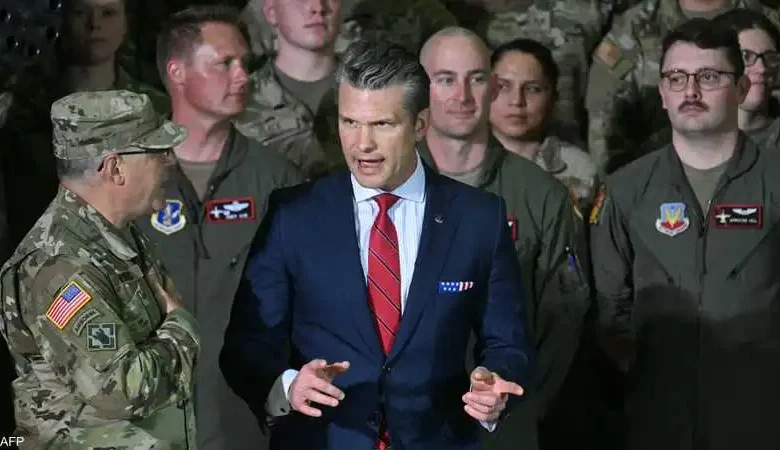
U.S. Defense Secretary Pete Hegseth has announced that the United States is moving toward a comprehensive restructuring of its security and military relationships with allies around the world, under a new policy centered on defense burden-sharing and ending what he described as “reliance on American protection without adequate contribution.”
Speaking on Saturday at the Shangri-La Dialogue in Singapore, Hegseth stated that Washington is entering a new phase in the management of its strategic alliances, emphasizing that the United States will no longer continue to bear the majority of the costs associated with defending wealthy allied nations.
The End of the “Free Defense” Era
The U.S. Defense Secretary declared that “the era of Washington paying for the defense of wealthy countries is over,” signaling the administration’s intention to require partners to increase their financial and military contributions to collective defense arrangements.
He added that the new policy is based on the principle of preventing “free-riding” rather than allowing complete dependence on the American security umbrella. According to Hegseth, this shift is intended to better protect U.S. interests while enhancing the readiness and defense capabilities of allied nations.
Direct Messages to Allies
Hegseth’s remarks were delivered before an international audience that included representatives from several key U.S. allies, among them officials from Japan, Germany, Saudi Arabia, and other Gulf states.
Observers believe the comments reflect a growing American inclination to redistribute security responsibilities between Washington and its allies, particularly as the United States faces mounting economic and military challenges on the global stage.
Shifts in U.S. Strategic Thinking
The statements come at a time when U.S. foreign policy is undergoing rapid reassessments of its security commitments worldwide. Washington is increasingly encouraging its partners to strengthen their own defense capabilities and assume a greater share of the costs associated with regional and international security.
This approach is widely viewed as a sign of a new phase in U.S. relations with its allies, one that could lead to different security arrangements in the years ahead, particularly across Asia-Pacific, Europe, and the Middle East.