Yemen Redraws the Red Sea Equation.. International Report Reveals Strategic Shifts Shaking Global Trade
Analytical report: The growing Yemeni role in the Red Sea is forcing major powers to reconsider their security and military calculations
NYN | Reports and Analyses
An international analytical report published by GIS Reports Online, a platform specializing in geopolitical and strategic studies, revealed rapid transformations taking place in the Red Sea, making it one of the world’s most sensitive and influential maritime corridors amid intensifying international competition and Yemen’s growing role in the equations of security, energy, and global trade.
The report explained that developments related to Yemen — particularly naval operations targeting vessels linked to the Israeli occupation entity — have pushed international powers to reassess their military and security strategies in the region, alongside the strengthening of Western military presence in the Red Sea and the Gulf of Aden.
The Red Sea: From Trade Route to Arena of International Conflict
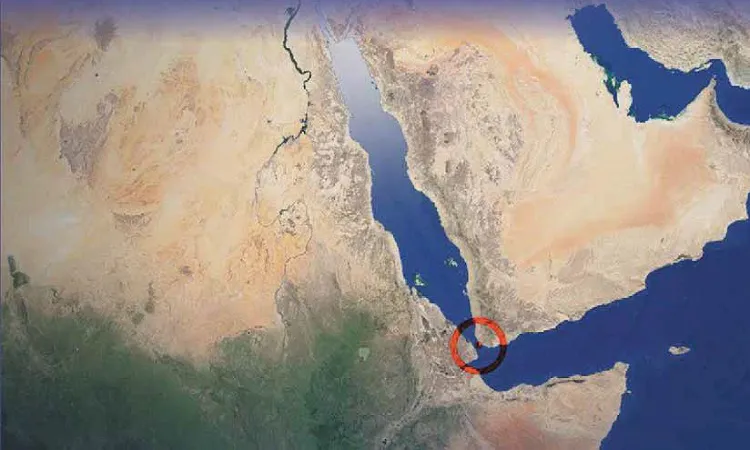
The report noted that the maritime corridor stretching from the Suez Canal to the Bab al-Mandab Strait is no longer merely a lifeline for global trade, but has become an open arena of conflict where military, economic, and technological calculations intersect.
It pointed out that approximately 12% of global trade passes through this corridor, in addition to nearly one-third of the container traffic linked to the Suez Canal, granting it exceptional strategic importance for major world powers.
The report stressed that Yemen’s geographic position has given Sana’a significant leverage over international navigation, especially with the increasing use of drones and naval missiles within what it described as “asymmetric warfare” in the Red Sea.
Disruptions to Shipping Increase Trade and Energy Costs
The report highlighted that security tensions have prompted many global shipping companies to reroute their vessels via the Cape of Good Hope instead of passing through Bab al-Mandab, leading to increased maritime transport, insurance, and energy costs, as well as delays of several days in commercial voyages between Asia and Europe.
It added that these developments have begun casting shadows over the global economy and international supply chains amid growing fears of a broader regional confrontation.
Intensifying U.S.-China Competition for Influence
The report explained that the United States and China view the Red Sea as a decisive strategic axis in the struggle for global influence, noting that Djibouti has become a clear example of this rivalry after hosting both American and Chinese military bases simultaneously.
It further stated that Beijing has strengthened its economic presence through projects linked to the “Belt and Road Initiative,” including the development of ports, infrastructure, and maritime communication networks, while Washington and its allies continue efforts to protect international trade routes and curb the expansion of Chinese and Iranian influence in the region.
Expanding Emirati Influence and Growing Israeli Presence
The report also addressed the UAE’s expanding role in the Red Sea through a network of ports, bases, and logistical corridors extending toward the Horn of Africa, alongside the growing Israeli presence in the region, which has further complicated the security and political landscape.
It noted that normalization agreements have contributed to enhancing undeclared security coordination between Israel and certain Gulf states aimed at securing maritime navigation and countering Iranian influence, leading to a reshaping of regional alliances in the Red Sea and the Horn of Africa.