British Website Reveals: Egyptian–Saudi Intelligence Alliance to Curb UAE Influence in Yemen
Cairo Shares Sensitive Information With Riyadh on Abu Dhabi’s Moves and Freezes Strategic Port Deals Amid a Struggle for Influence in the Red Sea
NYN | Reports and Analyses
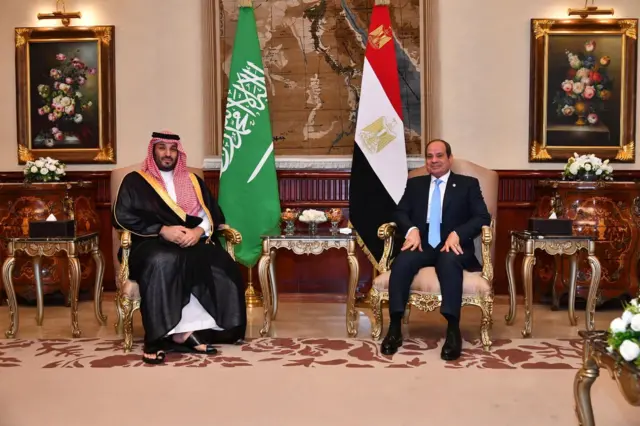
A British website has revealed a significant shift in the regional alliance landscape, marked by growing intelligence and security coordination between Egypt and Saudi Arabia, in a move aimed at confronting the expanding influence of the United Arab Emirates in Yemen and the surrounding Red Sea region.
The British outlet Middle East Eye reported that Cairo provided Riyadh with detailed intelligence concerning Emirati activities in Yemen. This included precise coordinates and movements of vessels, as well as audio recordings of Emirati officials that allegedly reveal the nature of support provided to the Southern Transitional Council.
Unprecedented Security Coordination Between Cairo and Riyadh
According to the report, this cooperation reflects an advanced level of security coordination between Egypt and Saudi Arabia on one of the most sensitive regional files, amid increasing divergences within the allied camp over the management of the Yemen conflict and the mechanisms of influence in the country’s south.
The website noted that Egypt’s approach is driven by national security considerations. Cairo reportedly views the Emirati role in supporting armed and separatist groups in Yemen, Sudan, and Somaliland with growing concern, considering such policies a direct threat to Red Sea security, international maritime navigation, and the safety of the Suez Canal.
Egyptian Naval Readiness and Deterrent Signals to Abu Dhabi
In the same context, the report revealed military and operational coordination between Cairo and Riyadh. Saudi Arabia reportedly requested that Egypt raise the readiness level of its naval forces, including Mistral-class helicopter carriers, in order to monitor—and potentially disrupt—possible Emirati supply lines to the Southern Transitional Council in southern Yemen.
The outlet assessed that this move reflects a Saudi desire to curb Emirati ambitions through a heavyweight regional partner such as Egypt, at a time when doubts are increasing in Riyadh regarding Abu Dhabi’s ultimate objectives in Yemen.
Silent Tensions Between Cairo and Abu Dhabi
The report indicated that this Egyptian–Saudi rapprochement has generated quiet tensions in relations between Cairo and Abu Dhabi. The United Arab Emirates reportedly warned Egypt against deepening its partnership with Saudi Arabia at the expense of what it describes as shared interests between the two countries.
In response, the Egyptian leadership reportedly took steps carrying clear political and economic signals, most notably freezing the sale of strategic assets—including the port of Alexandria—to Emirati companies, despite previous understandings on such transactions.
Redrawing Influence Maps in Yemen and the Red Sea
The report concluded that Egypt, through this strategic shift, is seeking to restore full Saudi financial and political backing by prioritizing Riyadh’s vision and influence in Yemen. This forms part of a broader maneuver to confront Emirati expansion that Cairo views as incompatible with its long-term strategic priorities.
Observers believe these developments could place the United Arab Emirates in an unprecedented position of diplomatic isolation within the Gulf and Arab arenas, as part of what they describe as a redrawing of influence maps in Yemen and the Red Sea, where cohesion within a single alliance can no longer be taken for granted.