Russian Report Refutes Western Narrative: Iran’s Missile Power Is Expanding While America Faces a Troubling Gap
Moscow experts say Washington and “Tel Aviv” estimates are misleading — Iran’s “underground strategy” protects its arsenal and accelerates production.
NYN | Reports and Analyses
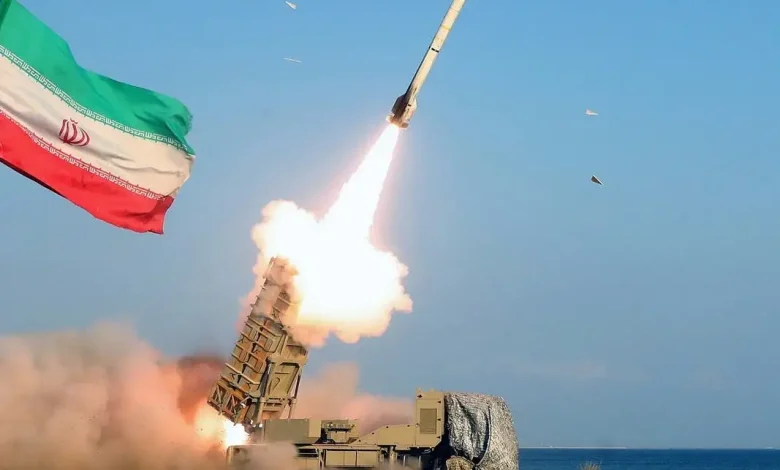
A recent Russian military report has revealed what it describes as a wide gap between Western intelligence assessments and the battlefield reality regarding the missile capabilities of both the United States and Iran, asserting that the prevailing narrative about the decline of Iran’s missile arsenal is “completely inaccurate.”
According to the report published by the Russian newspaper Izvestia and cited by the defense-focused website VPK, American and Israeli assessments claiming that Iran is nearing missile depletion are based on “unrealistic intelligence assumptions.” In contrast, field data allegedly indicate that Tehran continues to strengthen both its offensive and defensive capabilities.
A Gap in Assessment and a U.S. Missile Crisis
The report stated that the situation on the American side is markedly different, with Washington facing a growing shortage of both defensive interceptor missiles and offensive munitions, while Iran remains capable of preserving and rapidly expanding its stockpile.
Russian experts cited in the report argued that the war did not deplete Iran’s missile arsenal as expected. On the contrary, production and modernization efforts reportedly continued uninterrupted, even during the peak of military escalation.
The “Underground Strategy”: The Secret Behind Iran’s Advantage
Russian military expert Yuri Lyamin explained that the fundamental flaw in Western assessments lies in overlooking what he described as Iran’s “underground strategy,” which is used to protect its military-industrial infrastructure.
He stated that missile production facilities, launch systems, and warhead infrastructure are dispersed throughout complex mountainous terrain, making satellite surveillance only partially effective. According to him, satellite imagery reveals merely “the visible tip of the iceberg.”
Long-Range Strikes Are Changing the Equation
The report cited what it described as “the missile that targeted the Garcia base” in the Indian Ocean — at an estimated distance of around 4,000 kilometers — as evidence of Iran’s advancing missile capabilities. It claimed that such a weapon was not part of Iran’s arsenal during the previous war in June 2025.
According to the report, this development indicates that Iran has entered more advanced stages of missile manufacturing, enhancing its ability to conduct long-range strikes with greater precision.
Rapid Reconstruction Despite the War
Military expert Dmitry Kornev also stated that Western intelligence estimates during the “12-Day War” significantly misjudged the impact of strikes on Iran’s missile industry.
He explained that Tehran was able, within a short period, to resume large-scale missile production — including solid-fuel manufacturing — contrary to predictions that recovery would take years.
A Strategic Miscalculation in Washington
The report concluded that the resumption of military operations against Iran was based on misleading intelligence estimates, resulting in a strategic miscalculation by Washington, which underestimated Tehran’s ability to absorb strikes and rapidly rebuild its capabilities.
It added that current indicators reflect a reality fundamentally different from the Western narrative, arguing that Iran’s missile capabilities continue to grow and evolve, supported by a protected industrial infrastructure and a flexible production strategy.