Foreign Affairs: Iran War Exposes the Most Dangerous Weakness in American Military Power
U.S. report warns that Washington's military influence could be threatened if allied nations begin restricting the use of their bases and ports in future conflicts.
NYN | Reports and Analyses
The American magazine Foreign Affairs has revealed that the recent war against Iran has once again highlighted one of the most important strategic realities underlying U.S. military power: Washington’s heavy reliance on a vast network of military bases and logistical facilities provided by allied countries around the world.
Overseas Bases: A Fundamental Pillar of U.S. Operations
The magazine explained that, for decades, the United States has been able to overcome geographical challenges and vast distances through cooperation with partner nations that have allowed the use of their territory, ports, and military bases. It noted that the military intervention in Afghanistan in 2001 relied on facilities provided by Pakistan and Uzbekistan, while the 2003 invasion of Iraq was launched from Kuwaiti territory, in addition to the use of Jordanian territory for special operations inside Iraq.
The War on Iran Highlights the Extent of Dependence
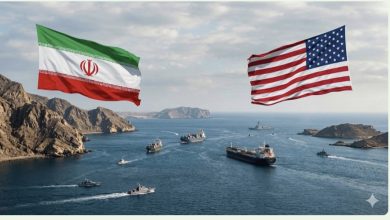
According to the report, recent U.S. military operations against Iran were no different from previous campaigns, relying heavily on a network of military bases, ports, and logistical facilities provided by host nations both within the region and beyond. These arrangements enabled the efficient deployment of troops and equipment and facilitated air and naval operations.
The magazine added that U.S. aircraft carriers, particularly the USS Abraham Lincoln and the USS Gerald R. Ford, were able to continue their missions thanks to logistical support provided through ports and facilities operated by allied countries. It stressed that the sustainability of America’s naval presence is closely tied to this external infrastructure.
Allied Infrastructure as a Critical Factor
In this context, Foreign Affairs pointed out that the USS Gerald R. Ford underwent maintenance and repair work at Greece’s Souda Bay naval facility after experiencing technical problems, underscoring the strategic importance of allied military installations to U.S. operations.
Concerns Over a Reassessment of Military Partnerships
The magazine argued that the consequences of the war on Iran may prompt a number of host nations to reconsider the extent of their military cooperation with the United States, particularly after military bases, facilities, and regional partners were targeted by missile and drone attacks during periods of escalation. Such developments, it noted, increase the costs and risks associated with participation in the U.S. military strategy.
A Potential Threat to Global American Influence
Foreign Affairs warned that any broad move to restrict the use of territory, military bases, or ports during times of conflict could limit the United States’ ability to deploy forces rapidly and conduct military operations across different regions of the world. This, in turn, could directly affect the level of American military influence that has remained one of the principal pillars of the international order since the end of World War II.
The magazine concluded that the war on Iran did not merely test America’s combat capabilities; it also exposed the extent of Washington’s dependence on its network of overseas military alliances—a factor that could become increasingly sensitive and vulnerable if host countries decide to reassess their security and political calculations in the years ahead.