Missile Ambush in Yemen’s Skies Disrupts U.S. F-16s… 15 Seconds Separated Two Pilots from Death
American magazine reveals details of a complex aerial confrontation: six surface-to-air missiles, advanced thermal sensors, and unconventional operational command directed the campaign
NYN | Reports and Analyses
Air & Space Forces Magazine, the official magazine of the U.S. Air and Space Forces, revealed details of what it described as a “terrifying” aerial confrontation experienced by U.S. F-16 fighter pilots while flying over Yemeni airspace on March 27, 2025.
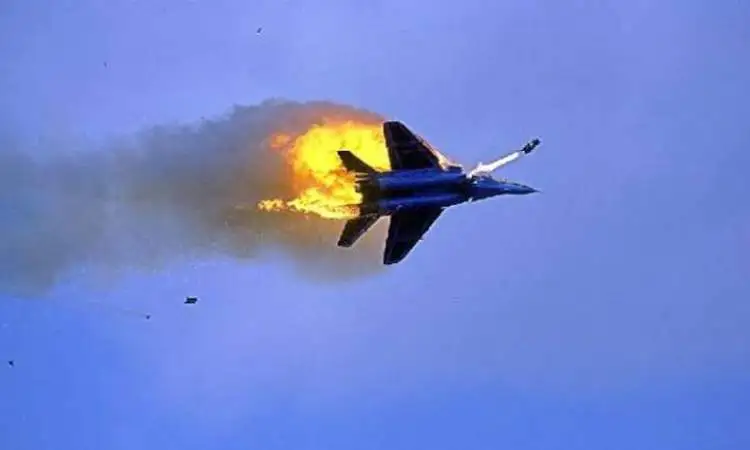
According to the report, Yemeni air defenses carried out a well-planned missile ambush targeting two F-16 fighter jets as they were withdrawing toward the Red Sea. Six surface-to-air missiles were launched simultaneously, forcing the aircraft to shift from attack mode to defensive posture within seconds.
15 Critical Seconds
The magazine stated that one of the missiles passed directly beneath the wing of one of the jets at an extremely close distance—so close that the pilots could hear its roar as it streaked by—describing it as one of the most dangerous moments a modern fighter pilot can face.
It added that the pilots—William Parks and Michael Bley—had only a narrow time window of between 15 and 20 seconds to execute sharp defensive maneuvers and deploy thermal countermeasures, enabling them to avoid a direct hit.
Tactics Based on Thermal Detection
According to the report, Yemeni air defenses relied on advanced electro-optical and infrared sensors to detect the fighters without activating conventional radar systems that could be detected by U.S. aircraft early-warning systems.
This approach, the magazine noted, limited the pilots’ ability to receive early warning and gave them extremely little time to take countermeasures, reflecting a notable evolution in surveillance and targeting methods.
Unprecedented Operational Command
In a significant strategic detail, the magazine revealed that management of the air campaign was not assigned to the usual central air command. Instead, oversight was transferred to the Joint Special Operations Command, based at Fort Bragg, by decision of General Michael Erik Kurilla.
This represents a precedent in managing an air campaign of this scale in the Middle East under a special operations command, which analysts viewed as an indication of the unconventional nature of the confrontation facing U.S. forces.
A New Deterrence Equation
The details reported by the American magazine reflect—according to observers—a transformation of Yemeni airspace into a complex operational environment for U.S. aviation, amid tactics combining upgraded conventional systems with modern low-signature detection technologies.
The report suggests that the technological superiority of modern aircraft, including high speed and jamming systems, is no longer a sufficient guarantee against missile threats, posing additional challenges for future air operations in the region.