Al-Hilah: Tehran Is Draining Its Adversaries’ Defenses and Delaying the “Major Strike” to the Bone-Breaking Stage
Palestinian Researcher Says U.S.–Israeli Attack Failed to Achieve Its Strategic Goals, Predicts Harsher Escalation in the Coming Days
NYN | Reports and Analysis
Palestinian researcher Ahmed Al-Hilah said that the joint attack launched by the United States and “Israel” against Iran exhausted its initial objectives without succeeding in toppling the Iranian regime or achieving the major strategic goals that had been planned.
Al-Hilah explained that the confrontation has not yet reached its conclusion, but is instead likely to move into a harsher phase in the coming days, as both sides enter a cycle of reciprocal strikes aimed at inflicting the greatest possible losses on the opponent.
Deliberate Attrition of Defenses
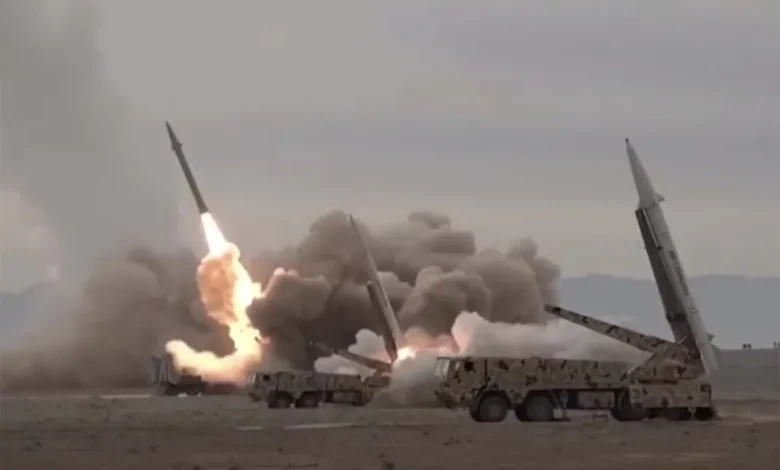
Al-Hilah pointed out that the ballistic missile and drone attacks witnessed in recent hours do not represent the core of Iran’s missile capabilities. Rather, he described them as part of a “deliberate attrition operation” targeting American and Israeli defense systems.
He stressed that Tehran still retains significant capabilities that have not yet been activated, foremost among them advanced hypersonic missiles. He suggested that their use may be reserved for a later stage of escalation if events move toward what he termed a “bone-breaking” phase of the conflict.
Rapid Reorganization
The researcher noted that Iran moved quickly to repair its leadership structures and damaged facilities, indicating that state institutions demonstrated a high capacity to absorb the initial strike and regain the initiative.
He also highlighted that Tehran is postponing the full engagement of its regional allies in the confrontation, seeking to demonstrate its ability to wage the battle independently at this stage, pending what he called the “decisive hour.”
A Broader Project to Reshape the Region
Al-Hilah warned that targeting Iran cannot be separated from a broader project aimed at reshaping the region and imposing comprehensive dominance over it. He argued that although Tehran is currently at the forefront of events, it may not be the final target in this trajectory.
He concluded by stating that the region stands on the threshold of major transformations that could signal the end of arrangements established a century ago, in reference to the Sykes–Picot Agreement. He added that the emerging regional order, “born from the flames,” will impose heavy costs on parties unable to read the unfolding landscape with strategic depth.