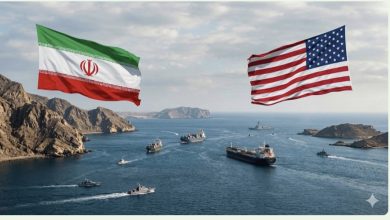
Washington’s Hormuz Blockade Coalition Shows Cracks… Europe Refuses to Join and Moves to Keep Strait Open
Britain and France lead a European pushback against Trump’s policies, affirming: we will not join the blockade and will work to ensure freedom of navigation in coordination with Tehran
NYN | Reports and Analyses
Signs of fragmentation are accelerating within the coalition the United States has sought to form to impose a blockade on the Strait of Hormuz, amid broad European refusal to participate in a move seen as a direct threat to the global economy—particularly for European countries most vulnerable to disruptions in energy supplies.
Broad European Rejection of the Blockade
Western reports, citing Bloomberg, indicate that key European countries—led by United Kingdom and France—have informed Washington of their refusal to join any coalition aimed at imposing a blockade on the strategic strait. They had also previously declined to participate in military action against Iran.
In this context, British Prime Minister Keir Starmer told Parliament that his country would not engage in the proposed Hormuz blockade, stressing that London is working, in coordination with international partners, to support efforts to keep the strait open to free navigation.
London and Paris: A Counter-Move to Washington’s Policies
According to sources, both London and Paris are adopting a shared approach opposing U.S. escalation in Hormuz, although differences remain over the nature of Europe’s future role—whether through diplomatic tools or economic pressure—to ensure maritime stability.
This stance reflects a notable shift in transatlantic relations, as European countries appear intent on avoiding a repeat of the “Ukraine scenario,” which they believe imposed significant economic and security costs.
Potential Coordination with Tehran
Available indications suggest that Paris and London are pushing for an alternative plan focused on keeping the Strait of Hormuz open to global trade, emphasizing that any such effort would require coordination with Tehran, despite firm public rhetoric rejecting control over the waterway.
A Vague International Conference
In a move reflecting the scale of divisions, Britain and France announced plans to organize an international conference involving more than 40 countries to discuss the future of navigation in Hormuz. However, the contours of this initiative remain unclear amid disagreements over whether the United States should be included or excluded from any forthcoming arrangements.