Unprecedented Drain on Gulf Air Defenses: Interception Costs Exceed Annual U.S. Production
Missile escalation imposes the “cost of defense” equation and puts Washington and its allies to the test of military sustainability.
NYN | Reports and Analyses
Western media reports have revealed that the pace of interceptor missile usage in Gulf countries during the recent military escalation with Iran has reached unprecedented levels—so much so that the number used within just a few days exceeds what the United States can produce in an entire year. This has raised serious questions about the sustainability of defensive capabilities if the confrontation continues.
According to The Economist, air defense systems in the Gulf are launching large numbers of interceptor missiles daily or every two days, at a rate surpassing the annual production capacity of some American manufacturing lines amid successive waves of missile attacks.
Hundreds of Missiles and Mounting Pressure on Defense Systems
Estimates indicate that Iran launched hundreds of ballistic missiles during the first days of the escalation, while Israel and several Gulf countries announced that they intercepted the majority of them. However, according to the reports, this defensive success carries a high operational and strategic cost, particularly given the reliance on multilayered defense systems that require constant coordination and a continuous supply of munitions.
Financial Burden and Strategic Attrition
In the same context, the news site Middle East Eye quoted researcher Kelly Grieco from the Stimson Center as saying that maintaining the current interception rate is “extremely costly.” She noted that there are genuine questions about whether the U.S. military and its regional partners can sustain operations at the same pace—especially since the region has not witnessed attacks of this magnitude since the Gulf War.
Estimates suggest that the cost of interception for just one day in a country such as the United Arab Emirates could exceed $2 billion, excluding the costs incurred by other countries in the region, highlighting the enormous financial burden of the confrontation.
Production Gap in Defense Systems
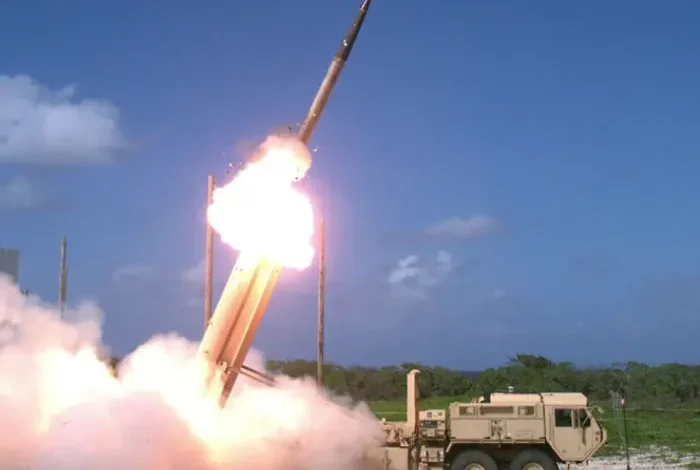
Meanwhile, The Wall Street Journal reported that Washington is facing challenges in replenishing its stockpiles of interceptor missiles, including those used by the MIM-104 Patriot and THAAD defense systems, as well as Standard Missile interceptors and long-range naval munitions.
These developments highlight a clear gap between the current rate of consumption and the capacity to reproduce and replenish supplies—heightening concerns that the confrontation could evolve into a prolonged war of attrition.
“Cost of Interception” Defines the Next Phase
Overall, Western reports conclude that the ongoing confrontation is no longer merely an exchange of military strikes but has evolved into a strategic war of attrition. While Washington and Tel Aviv seek to shorten the duration of the conflict, Iran appears to be betting on exhausting missile defense systems by driving the cost of interception to unsustainable levels.
Between the cost of attack and the cost of defense, the next phase appears increasingly dependent on the ability of all parties to bear the financial burden of an open confrontation—one whose outcome may ultimately be determined as much by economics as by military power.