Russian Media: Saudi Energy Facilities Under Pressure from Yemeni Escalation Amid Fears of a Major Surge in Oil Prices
Russian Newspaper Svobodnaya Pressa: Risks threatening navigation, energy, and insurance could drive up the cost of Saudi exports and confront oil markets with widespread repercussions.
NYN | Reports and Analyses
The Russian newspaper Svobodnaya Pressa warned of the consequences of escalating risks linked to Saudi navigation and energy, noting that Yemen’s geographical location overlooking the Red Sea and the Bab al-Mandab Strait grants Sanaa influential leverage over the Kingdom’s oil export routes and related trade flows.
Growing Pressure on Saudi Oil Exports
The newspaper indicated that ongoing tensions surrounding Saudi shipping routes could force shipping and maritime transport companies to recalculate navigating through the region, including rerouting vessels or imposing additional security and insurance measures.
According to the report, these developments are bound to increase insurance and shipping costs while extending voyage transit times, which could ultimately spill over into the cost of transporting Saudi oil and goods to global markets.
Energy Facilities in the Danger Zone
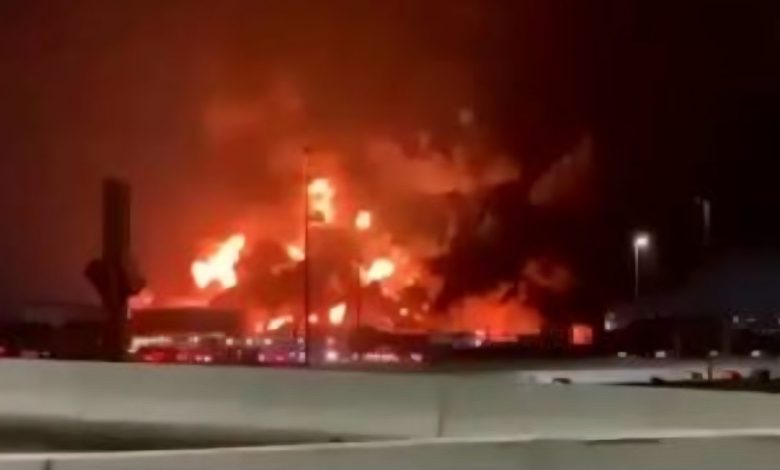
Svobodnaya Pressa considers that concerns become far more acute if escalation extends to oil production facilities, refineries, ports, and export pipelines. It notes that any widespread or prolonged disruption to this system could leave direct marks on the volume of Saudi supplies available to international markets.
The newspaper points out that Saudi Arabia’s pivotal role in the global oil market renders any major disturbance to its production or exports a factor capable of disrupting supply-demand balances, particularly if it coincides with difficulties in compensating for lost volumes from alternative sources.
Oil Faces Harsh Price Scenarios
In this context, the newspaper discusses the potential for oil prices to record extraordinarily high levels in the event of a severe supply disruption. It notes that reaching benchmarks such as $150 per barrel remains contingent on the volume of disrupted production, the duration of the outage, and the capacity of other producers to bridge the market deficit.
It stresses that any price estimates remain tied to actual market developments—most notably the scale of the supply deficit, the response of producing nations, and global demand.
Bab al-Mandab as Strategic Leverage
The publication highlights the strategic weight of Yemen’s geographic position, emphasizing that oversight of the Bab al-Mandab Strait and the Red Sea gives Sanaa the ability to impact vital commercial and oil arteries. Consequently, the fallout of escalation would not be confined to facilities within Saudi Arabia, but would ripple across maritime transport, marine insurance, and supply chains.
Under this projection, persistent regional risks could make transporting Saudi oil and commodities increasingly expensive and complex, with a portion of these added costs likely passing on to markets and consumers.
Ramifications Beyond the Oil Sector
Svobodnaya Pressa concludes that the impact of Yemeni pressure, according to its analysis, is not limited to potential threats against energy facilities; it encompasses an integrated system that includes navigation, insurance, energy, and supply chains.
The paper asserts that the broadening scope of these risks will elevate the economic toll of any prolonged escalation, especially for Saudi Arabia, which relies heavily on the stability of maritime export routes to sustain the flow of its exports to global markets.
Note: Figures and scenarios regarding oil reaching $150 or the halting of exports are presented here as analytical estimates cited in the Russian report, not confirmed forecasts.