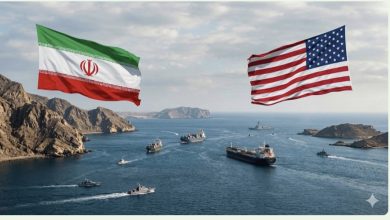
Somalia Signals Possible Closure of the Bab el-Mandeb Strait… Rising U.S. Concern Over Regional Alignment with Sanaa
U.S. and Israeli moves in “Somaliland” push Mogadishu to wield the strategic strait card amid fears of new alliances reshaping the Red Sea equation
NYN | Reports and Analyses
Somalia has signaled potential escalation measures that could extend to closing the Bab el-Mandeb Strait and imposing strict restrictions on international navigation, in direct response to U.S. and Israeli moves supporting the secession of the “Somaliland” region—an action that threatens new tensions in one of the world’s most critical maritime corridors.
Somali Warning: The Strait Is a Sovereign Card
In a strongly worded message, Somalia’s ambassador to Ethiopia, Abdullah Warfa, affirmed that any external intervention targeting his country’s unity could be met with strategic measures, including restricting access to the Bab el-Mandeb Strait. He stressed that Mogadishu would not stand idle in the face of what he described as attempts to fragment the state, reaffirming Somalia’s commitment to protecting its sovereignty over its territory and territorial waters.
U.S. and Israeli Moves Heighten Tensions
These statements come amid a noticeable escalation in U.S. and Israeli activities within “Somaliland,” where Israel has announced the appointment of a new ambassador to the region, coinciding with a visit by the commander of United States Africa Command to the city of Hargeisa.
According to circulating reports, the visit included discussions on the possibility of establishing a joint U.S.-Israeli military base in the area overlooking the Bab el-Mandeb Strait—a move the Somali government considers a direct threat to its national security and an attempt to entrench a secessionist reality backed by foreign support.
Bab el-Mandeb… A Regional Pressure Lever
Somalia’s signaling of its geographic leverage reflects a shift in handling the conflict, with the strategic strait becoming a pressure card that can be used against foreign influence—especially amid intensifying international competition over vital maritime routes in the Red Sea and the Gulf of Aden.
U.S. Concerns Over Alignment with Sanaa
On the other hand, these developments have raised growing concern within U.S. circles, alongside increasing discussion about the possibility of operational coordination between Somalia and forces aligned with the government in Sanaa—a scenario that could lead to the formation of a regional axis capable of influencing international shipping routes.
American reports and forums suggest that any such alignment could turn the Bab el-Mandeb Strait into a strategic foothold for regional powers, potentially threatening U.S. and Israeli interests and reshaping the balance of influence in the region.
Redrawing the Red Sea Landscape
In light of these developments, the Red Sea region appears to be entering a new phase of geopolitical escalation, where sovereign calculations intersect with international rivalries, amid indications of shifting alliances that may redraw the map of influence across one of the world’s most vital maritime corridors.