U.S. Report: Impact of Yemen Attacks Is Shifting the Balance of Power

NYN | Reports and Analyses
A recent report published by the prestigious American magazine Time revealed that the impact of attacks originating from Yemen carries deep strategic implications that go beyond their immediate military scope. The magazine warned that the growing involvement of the Houthis in the current conflict represents a qualitative shift that could expand the confrontation regionally and potentially turn vital waterways into a costly arena of attrition for both the United States and Israel.
Strategic Dimensions Beyond the Military Aspect
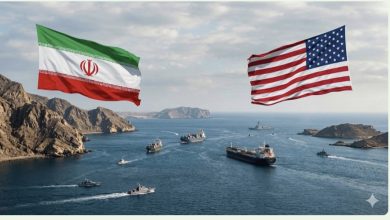
According to Time, recent developments in Yemen confirm that the nature of the war is no longer confined to its traditional framework, but has taken on new geopolitical dimensions. Ongoing attacks targeting maritime navigation in the Red Sea and the Bab al-Mandab Strait, for example, are not limited to causing physical damage to vessels—they also cast a shadow over global supply chains and the international economy. This, in turn, imposes new challenges on major powers that rely on these routes for trade and transportation.
A Qualitative Shift and Expansion of Regional Conflict
The report indicates that Houthi participation is not merely an addition of regional military force, but a catalyst for fundamentally altering the balance of power. The group possesses the capability to “choke” strategic maritime chokepoints, granting it unprecedented strategic leverage in a region critical to global trade and energy security. As a result, this capability could turn the area into a persistent flashpoint, escalating tensions and broadening the scope of the conflict to include other regional and international actors, either directly or indirectly.
Waterways as a New Arena of Attrition
According to Time, the transformation of waterways into an arena of attrition means that any effort to control or secure them will require vast resources and sustained military operations. This would place enormous pressure on defense budgets and increase the risk of direct confrontation. Moreover, disruptions in these routes negatively affect global trade flows, raising shipping and insurance costs, and ultimately impacting consumer prices worldwide.
Conclusion
In conclusion, the Time report finds that the impact of Yemen’s attacks represents a significant geopolitical shift that calls for a comprehensive reassessment of regional and international strategies. Global powers must recognize that these attacks are not merely a military threat, but also an indicator of deeper changes in the dynamics of power and influence in the Middle East—alongside a clear sign of escalating tensions in vital maritime corridors that serve as lifelines for the global economy.