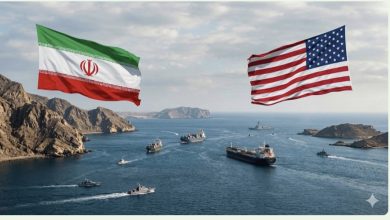
Bab al-Mandab: Escalating Security Challenges Threaten Global Navigation
NYN | Reports and Analyses
While the Bab al-Mandab Strait has historically been known as a vital and secure passage for global trade, it is now facing escalating security challenges that threaten international navigation in unprecedented ways. The British newspaper The Telegraph recently warned of the dangers of any direct military confrontation between the U.S. military and Yemeni forces in this strategic waterway. Such a potential escalation could turn this vital corridor into a “gateway of tears” for American forces, according to the paper’s analysis.
The Telegraph’s Warnings of an Imminent Escalation
A recent analysis published by The Telegraph emphasized that U.S. military involvement in a direct confrontation with Yemeni forces in the Bab al-Mandab Strait represents a highly dangerous challenge. This challenge goes beyond traditional military calculations, given the unconventional tactics adopted by forces in Sana’a. These tactics primarily rely on drones, missiles, and fast boats in maritime attacks.
The British newspaper noted that U.S. military resources are already under strain due to extensive efforts to secure international navigation in the Red Sea. Any new escalation could further increase pressure on these resources, leading to greater depletion of U.S. military capabilities in the region.
The Telegraph also pointed out that Yemeni forces possess significant experience in maritime guerrilla warfare, gained through years of ongoing conflict. They also demonstrate a high level of adaptability to changing maritime conditions. This makes them a formidable opponent in the Bab al-Mandab Strait, which is characterized by complex geography and proximity to coastlines.
Sana’a’s Tactics and Their Impact on Maritime Security
Yemeni forces have employed unconventional methods that have clearly disrupted Western military calculations. These include conducting precise attacks on commercial and military vessels passing through the strait, using advanced missiles and effective-range suicide drones. They also rely on fast, lightweight boats that are difficult to detect and target using conventional methods.
These tactics aim to inflict maximum damage at minimal logistical and human cost. Such attacks significantly increase security challenges in Bab al-Mandab for international navigation. They have also led to a noticeable rise in maritime insurance costs, prompting many global shipping companies to alter their routes. Many now opt to reroute around Africa via the Cape of Good Hope, adding substantial financial and logistical burdens to global trade.
Meanwhile, international naval forces face a complex and unfamiliar challenge that requires new defensive and offensive strategies. These strategies must be adapted to the nature of asymmetric threats emerging in the region. Major powers were not fully prepared for this type of maritime warfare, making it more difficult to protect vessels in this narrow waterway.
Regional and International Context and Conflict Implications
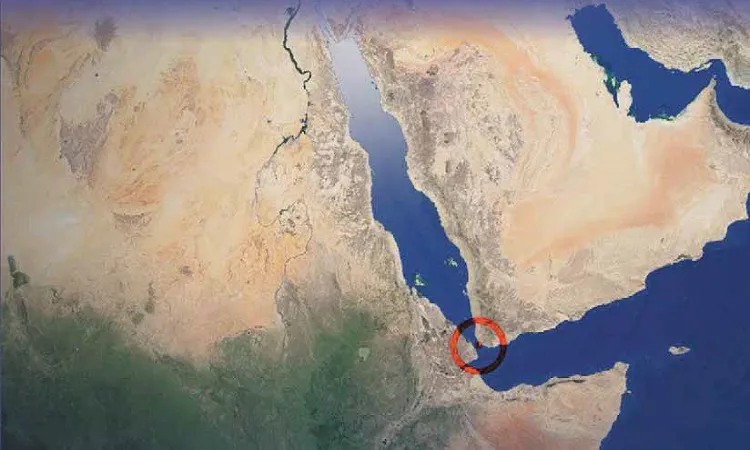
These escalating tensions come within a highly unstable regional and international context. The Red Sea has witnessed continuous escalation for several months, directly affecting global trade flows day by day. The Bab al-Mandab Strait is a critical maritime chokepoint, through which around 12% of global seaborne trade passes, including vital oil and gas shipments.
Moreover, any large-scale confrontation could lead to serious global economic consequences. These may include sharp increases in global oil prices and significant disruptions to international supply chains, threatening the already fragile global economy. International actors are working to contain the situation and prevent further deterioration.
On the other hand, some strategic analysts believe that military escalation could expand the scope of the conflict to other sensitive areas in the Middle East, posing a broader threat to regional security. This has raised widespread international concern among major powers. The situation calls for immediate and intensive diplomatic efforts to avoid a full-scale confrontation. The challenges surrounding Bab al-Mandab remain central to this complex geopolitical landscape.
Today, the Bab al-Mandab Strait faces an extremely complex and dangerous security situation, making it a global flashpoint. Addressing these challenges requires a comprehensive and multi-faceted international response that combines effective diplomacy with strong security measures. The primary goal is to safeguard vital international navigation and minimize the risks of military escalation as much as possible. The fate of this critical waterway remains tied to upcoming developments in the region, and the ability of all parties to exercise restraint and engage in dialogue will be key to avoiding a broader catastrophe that could affect everyone.