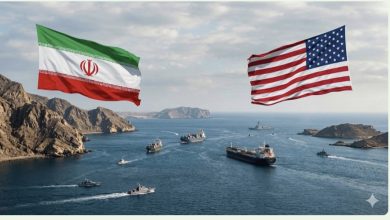
Financial Times Analysis: Hormuz Could Become Leverage Forcing Washington to Recalculate Its Positions
A writer in the Financial Times asserts that Tehran views the Strait of Hormuz as its final strategic card, betting on the impact of navigation disruption in Hormuz, the Red Sea, and Bab al-Mandab to push the US toward more serious negotiations.
NYN | Reports and Analyses
In an analysis published by the Financial Times, writer Vali Nasr argued that the renewed escalation between Iran and the United States stems not from a misunderstanding of the Memorandum of Understanding signed between the two parties, but rather from a growing conviction in Tehran that Washington exploited the period of calm to rearrange its cards and seek to curb Iranian influence in the Strait of Hormuz.
The analysis explained that the United States entered the confrontation seeking to impose new conditions on Iran—whether by weakening the Islamic Republic or restricting its nuclear program and regional role. However, according to the writer, the course of events provided Tehran with a more vital strategic card: solidifying its position within the navigation security equation in the Strait of Hormuz.
Hormuz at the Core of Iranian Calculations
The writer observed that the Iranian leadership interpreted several US actions following the signing of the MoU—including the continued freezing of Iranian assets, the reinforcement of the US military presence, and the encouragement of shipping traffic along the Omani coast—as indicators of an effort to undermine Iranian influence in the strait and reshape the balance of power there.
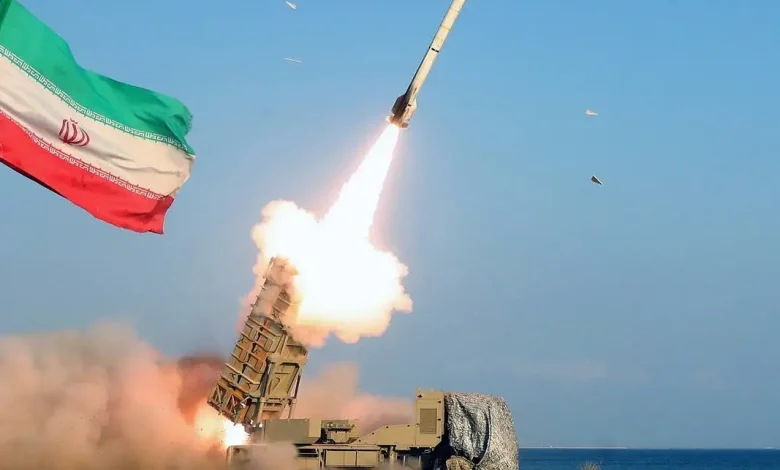
According to the analysis, these developments led Tehran to believe that a policy of restraint would yield no political or economic gains, and that calculated escalation might be the only means to compel Washington back to the negotiating table under more balanced terms, including security guarantees, economic relief, and a broader nuclear agreement.
The Ultimate Bargaining Chip
The writer emphasized that the Strait of Hormuz currently represents Iran’s most critical strategic tool of leverage, noting that relinquishing this card would leave Tehran in any future negotiations without sufficient deterrents or tangible guarantees for the fulfillment of US commitments.
He added that Tehran views control over the navigation security equation in the strait as a fundamental pillar for maintaining its bargaining position, particularly amid ongoing regional tensions.
A Bet on the Global Economy
In conclusion, Vali Nasr noted that the Iranian gamble relies on the notion that Tehran’s capacity to endure pressure may exceed Washington’s ability to tolerate the fallout from disruptions to energy markets and global trade. He pointed out that any escalation affecting navigation through the Strait of Hormuz—and potentially extending to Bab al-Mandab and the Red Sea—could impose mounting economic pressure that forces Washington to reassess its stance.
Nevertheless, the writer pointed out that this gamble carries substantial risks, as the pace of escalation could outpace the ability of all parties to contain its repercussions, opening the door to far more complex scenarios at both regional and international levels.