After 100 Days of War Against Iran: French Newspaper Reveals “Trump’s Shock” and a Strategic Shift That Upended the Equation
Le Monde: The U.S.–Israeli war strengthened Tehran’s influence and forced Washington back to negotiations after failing to achieve regime change or weaken Iran
NYN | Reports and Analyses
The French newspaper Le Monde revealed that the recent war waged by the United States and Israel against Iran produced results opposite to those sought by Washington and Tel Aviv, asserting that Tehran emerged from the confrontation stronger and more influential at the regional level.
The newspaper explained that what it described as the “Trump Shock” was embodied in President Donald Trump’s need to shift from a policy of pressure and dictates to one of negotiation after the war failed to achieve its principal objectives, foremost among them subduing Iran or reducing its regional influence.
Failure of Regime-Change Expectations
According to the report, political and security circles in the United States and Israel—led by U.S. President Donald Trump and Israeli Prime Minister Benjamin Netanyahu—had wagered that the second round of war would bring about the collapse of the Iranian regime or at least significantly weaken it. However, the outcome proved entirely different from those expectations.
The newspaper stated that the war contributed to strengthening the cohesion of Iranian state institutions and consolidating the influence of its security, military, and political structures. It also reinforced domestic unity around the new leadership, which was selected more quickly than anticipated despite the sensitivity and complexity of the situation.
Strengthening the Ruling Elite Instead of Fragmenting It
Le Monde noted that the U.S.-Israeli expectation of divisions emerging within Iran’s ruling elite suffered a clear setback, as the war instead helped unify those elites and brought forward figures who were more hardline in confronting Washington and Tel Aviv than in previous periods.
The newspaper added that recent developments demonstrated the Iranian system’s ability to absorb external pressures and transform them into sources of internal support that enhanced its political and security cohesion.
The Strait of Hormuz: The Card That Disrupted the World
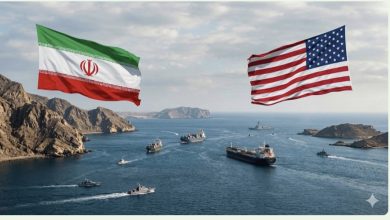
In another aspect of its analysis, the newspaper pointed to what it described as a “strategic awakening” within Iran, which successfully leveraged the issue of the Strait of Hormuz as a pressure tool whose importance and impact exceeded that of Iran’s nuclear file.
It stressed that Tehran managed to turn the strait into a factor of global influence, presenting the international community with broad economic and security challenges at a time when Washington and Tel Aviv had been counting on confining the negative consequences of the war to Iran’s borders alone.
A Shift in the Regional Balance of Influence
The French newspaper concluded that the results of the war redrew an important part of the regional balance of power. Iran emerged in a stronger position within the equations of regional influence, while the United States found itself facing a political and strategic reality far more complex than it had anticipated.