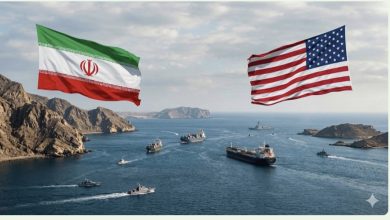
American Magazine: Iran Holds Legal Justification in Hormuz Crisis, Washington Initiated Military Escalation Before Proving Agreement Breach
Foreign Policy analysis asserts that the MoU's ambiguity gave Tehran a legal basis to interpret its terms, while early US strikes undermined chances of stabilizing the ceasefire.
Reports and Analyses
The US magazine Foreign Policy confirmed that the ambiguity surrounding the Memorandum of Understanding (MoU) concluded between the United States and Iran regarding the Strait of Hormuz created broad room for conflicting interpretations, considering that Tehran possesses a “plausible” legal argument that it did not breach the text of the agreement before Washington launched its military operations against targets inside Iranian territory.
The analysis explained that in practice, the agreement was not a clear MoU so much as it became what the magazine described as a “memorandum of misunderstanding,” resulting from the ambiguous phrasing adopted by the White House, which left many key provisions without clear mechanisms for implementation or dispute resolution.
Ambiguity in Phrasing Opens Door to Contradictory Interpretations
The report pointed out that ceasefire agreements require high precision in drafting their terms, as any ambiguity can become a direct trigger for resuming hostilities, especially given the deep lack of trust between the warring parties.
It noted that Paragraph 5 of the agreement was the most controversial, stating that Iran would make “necessary arrangements” to ensure the safe passage of commercial vessels without imposing fees for a period of sixty days—a phrasing Tehran interpreted as a tacit recognition of its role in managing navigation inside the Strait of Hormuz.
Dispute Over Managing Navigation in the Strait of Hormuz
According to the analysis, Iran relied on this phrasing to implement a system of passage permits and define navigational corridors under its supervision within the strait. Meanwhile, the United States moved to thwart this interpretation by directing ships along alternative routes, while maintaining sanctions on the Iranian entities overseeing the strait.
The magazine observed that the dispute stemmed not only from conflicting interests, but also from the loosely drafted text of the agreement, which allowed each party to rely on a different interpretation of the text.
Foreign Policy: US Bombing Preceded Proof of Agreement Breach
The magazine emphasized that Iran possesses a legal foundation to argue it did not violate the text of the agreement prior to the start of the US strikes. It explained that the memorandum did not contain an explicit provision prohibiting Tehran from using force against third parties, nor did it obligate it to permit the passage of all ships without exception.
The analysis concluded by highlighting that the crisis exposed shortcomings in the negotiation and drafting process, concluding that the vague text led to contradictory interpretations between the two sides, ultimately undermining chances to stabilize the truce, reopen the Strait of Hormuz, or resume negotiations based on a clearer understanding.