Foreign Policy: “Saudi NATO” is Grand in Rhetoric, Limited on the Ground
The American magazine: Riyadh spawns alliances instead of addressing the root causes of conflict... and its security begins with ending the Yemen war and lifting the blockade.
NYN | Reports and Analyses
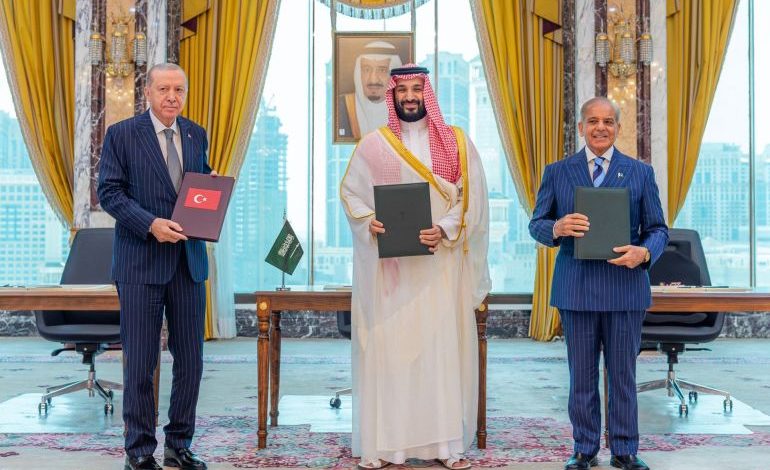
American magazine Foreign Policy observed that what is known as the “Mecca Agreement” between Saudi Arabia, Turkey, and Pakistan has received grand political and media descriptors, including the “Islamic NATO” and the “Sunni NATO.” However, according to the magazine, these labels do not reflect the existence of an integrated military alliance possessing real operational capabilities on the ground.
Grand Alliances… Limited Substance
The magazine pointed out that the exaggerated portrayal of the new alliance seems closer to an attempt to project strength and scale, at a time when its practical implementation remains limited. To date, it lacks sufficient foundations to transform into a military bloc capable of addressing regional security dilemmas.
According to Foreign Policy, relying on the formation of new alliances does not resolve the root causes of the region’s crises; rather, it risks repeating past models that failed to deliver sustainable solutions to ongoing conflicts.
Riyadh Facing the Choice of Addressing Conflict Roots
The magazine contends that what Saudi Arabia needs is not the continuous formation of new alliances, but rather addressing the actual causes of regional tensions—chief among them the war in Yemen and its ongoing repercussions.
It noted that the blockade imposed on Yemen represents one of the core issues that must be addressed, emphasizing that the continuation of restrictions and interventions does not contribute to building a stable security environment, even as the alliances tied to the war over past years have shifted.
“Saudi Security Begins in Yemen”
Foreign Policy stressed that achieving more sustainable security for Saudi Arabia and the region requires confronting conflict flashpoints rather than perpetuating them through new military arrangements and coalitions.
In this context, the magazine asserted that ending the war in Yemen, lifting the restrictions imposed on it, stopping interference in its affairs, and supporting a genuine political process represent essential steps toward constructing more stable security arrangements for Saudi Arabia and regional states.
Alliances Cannot Substitute for Political Solutions
The magazine concluded that the most realistic approach to regional security lies in addressing the sources of tension and conflict, rather than relying solely on forming alliances carrying grand titles without adequate executive mechanisms.
From this perspective, addressing the Yemeni dossier appears—according to the magazine’s argument—far more vital than continuing to produce new military alliances that may remain limited in effectiveness unless the political drivers behind regional instability are resolved.